Imagine watching over sheep in the darkness when a sudden brightness surrounds you. This is how Luke introduces the shepherds’ encounter with an angel on the night of Jesus’ birth.
The message was good news: the Saviour had been born. Read the story together, then help your child share encouragement through a simple Angel Message Card.
For families: Suitable for approximately ages 4–10 with adult support. Allow about five minutes for the story and 10–15 minutes for the card. Younger children can draw while an adult writes.
Bible reference: Luke 2:8–14, with the shepherds’ response in Luke 2:15–20. This is a shortened paraphrase, not a word-for-word Bible quotation. Invitations to imagine feelings are discussion prompts.
The Angels and Shepherds: A Christmas Story for Children
1. Shepherds Watching Their Flock
Near Bethlehem, shepherds were staying in the fields and keeping watch over their flock at night. Caring for sheep was their everyday work.
Jesus had been born in Bethlehem. Mary had wrapped Him in cloths and laid Him in a manger, a place where animals were fed. Now the shepherds were about to hear the news.
Pause and imagine: “What might you notice while watching sheep outdoors at night?” Luke tells us it was night; it does not describe the weather or every sound around them.
2. An Angel Brings Good News
An angel of the Lord appeared, and the glory of the Lord shone around the shepherds. They were very afraid.
The angel reassured them and announced good news of great joy for all the people. A Saviour had been born that day in the city of David: Christ the Lord.
Bethlehem was known as David’s city. The angel gave the shepherds a sign: they would find a baby wrapped in cloths and lying in a manger.
Tell your child: “The angel was announcing who Jesus is. Christians believe He is the Saviour, who came to rescue us from sin and bring us to God. ‘Christ’ means the Anointed One, or Messiah.”
3. A Multitude Praises God
Suddenly, a great multitude of the heavenly host appeared with the angel, praising God. They gave glory to God in heaven and proclaimed peace on earth to those on whom His favour rests.
Christmas pictures often show angels singing above the fields. Luke describes them praising God and saying words of praise; he does not specifically say that they sang or describe their wings.
The joyful announcement reached shepherds at work, rather than being presented as a message only for kings or wealthy people.
4. The Shepherds Respond
The story continues in Luke 2:15–20. After the angels left, the shepherds went to Bethlehem. They found Mary, Joseph and the baby lying in the manger.
They told others what they had heard about the child. Later, they returned, glorifying and praising God for what they had heard and seen.
Ask: “What sign helped the shepherds recognise the baby?” Return to the cloths and manger in the angel’s message.
Why Did the Angels Appear to Shepherds?
Luke tells us whom the angel visited, but does not explicitly explain every reason God chose them. We should avoid presenting guesses about their status or feelings as facts from the Bible.
The shepherds are introduced as people doing ordinary work. Christians can reflect on how their place in the story fits Luke’s wider concern for humble people and those easily overlooked.
“God included the shepherds in the joyful news about Jesus. We do not have to be rich, famous or the best at everything to be loved by God.”
For children, this can open a conversation about respect. A person’s job, possessions or popularity does not determine their worth.
Three Lessons to Explore Together
1. Joy Begins With the Good News of Jesus
The angel’s announcement centres on Jesus: the Saviour has been born. Presents, decorations and family gatherings can be lovely parts of Christmas, but they are not the heart of the Nativity story.
Ask your child to remember some good news they wanted to share, such as a loved one coming to visit. Use that experience as a starting point for understanding the shepherds’ joy.
Ask: “What are we celebrating about Jesus at Christmas?”
Leave room for mixed feelings. A child can join in Christmas prayer while also feeling sad, tired or missing someone.
2. Hope Leaves Room for Fear and Questions
The angel reassured frightened shepherds. Their fear was part of their encounter; it was not proof that they lacked faith.
When a child worries about school or a change at home, listen, pray together and plan a practical next step. They might ask a teacher for help or talk with another trusted adult.
The angels’ message of peace points to the hope Jesus brings. It does not mean that everyone will immediately agree, that wars have ended or that a faithful family will never face difficulty.
Ask: “Who can you talk to when you feel worried? What would you like us to pray about?”
3. Every Person Deserves Care and Respect
The announcement to shepherds invites families to notice people they might otherwise overlook. Your child could welcome someone into a game, thank a person who helps at school or remember a lonely relative.
These are family applications inspired by the story. We show love because people matter, not because they must earn a place in our friendship.
Ask: “What is one way we could help someone feel included this week?”
Christmas Activity: Make an Angel Message Card
Ages: approximately 4–10. Time: 10–15 minutes. Materials: paper or card, a pencil and crayons or coloured pencils. Stickers are optional. No template or purchased book is needed.
1. Fold Your Card
Fold a sheet of paper in half. Recall the story: the angels announced Jesus’ birth, and the shepherds shared what they heard. Your card will share a Christmas greeting and encouragement.
2. Draw an Angel
Invite your child to draw an angel, stars or a scene from the story. Wings are a familiar artistic symbol, but Luke does not tell us exactly what the angels looked like in this encounter.
Let your child choose the colours. There is no single correct way to draw this reminder of the story.
3. Add a Message
For a Christmas card, write “Good News! Jesus Is Born!” on the front. This is a simple summary of the story, not a direct Bible quotation.
Inside, choose one personal message:
- “You are loved and remembered.”
- “Wishing you peace and joy this Christmas.”
- “Thank you for caring for us.”
- “We are thinking of you.”
Younger children can dictate while an adult writes. Choose wording that will be welcome to the recipient, and do not promise that a problem or illness will disappear.
4. Choose Someone to Encourage
Your child might choose a grandparent, teacher, friend or neighbour your family knows. Ask: “Who might enjoy knowing we are thinking of them?”
Share the card with an adult’s help. For a community project or care home, an adult can check how cards are accepted before arranging delivery.
5. Share and Reflect
After sending the card, ask: “What did you want that person to know?” You do not need to expect a reply or guess exactly how they will feel.
This is an ordinary act of kindness inspired by the story, not a claim that your child has received a new message from an angel.
Three Questions for Family Storytime
- What did the angel tell the shepherds? Recall who had been born and the sign they would find.
- Why does it matter that shepherds heard the news? Talk about how ordinary people are included in the story.
- How could our family share encouragement? Choose one small action you can do together.
Let children answer in their own words or pass on a question. A short conversation is enough.
A Short Christmas Prayer
Dear God,
Thank You for the good news of Jesus’ birth.
Help us remember that every person is valuable and loved.
Give us hope when we are worried and help us ask for support.
Teach us to notice people who need encouragement.
May our family share Your love through kind words and actions.
Amen.
Questions Families Often Ask
Where is the angels’ Christmas message in the Bible?
The announcement appears in Luke 2:8–14. The shepherds’ visit and response follow in Luke 2:15–20.
What did the angel tell the shepherds?
The angel announced the birth of a Saviour, Christ the Lord, in David’s city. The sign was a baby wrapped in cloths and lying in a manger.
Was this angel Gabriel?
Luke does not name the angel who speaks to the shepherds. Gabriel is named earlier in Luke, including in the announcement to Mary. We should not assume the unnamed angel here is Gabriel.
Were the angels singing?
Luke describes the heavenly host praising God and saying words of praise. Singing angels are a familiar Christmas tradition, but singing is not explicitly stated in this passage.
How can I explain the story to a five-year-old?
Try: “Shepherds were watching their sheep at night when an angel appeared. They were frightened, but the angel brought good news: Jesus, the Saviour, had been born. Then many angels praised God.”
What can preschoolers do for the activity?
Let them decorate a folded card and choose a person to encourage. An adult can write a short message in the child’s own words.
Continue Your Family’s Christmas Storytime
Explore what happened before the announcement in The Journey to Bethlehem, or read the wider story in The Nativity for Children: A 10-Minute Family Storytime.
Explore the Nativity Through Colouring
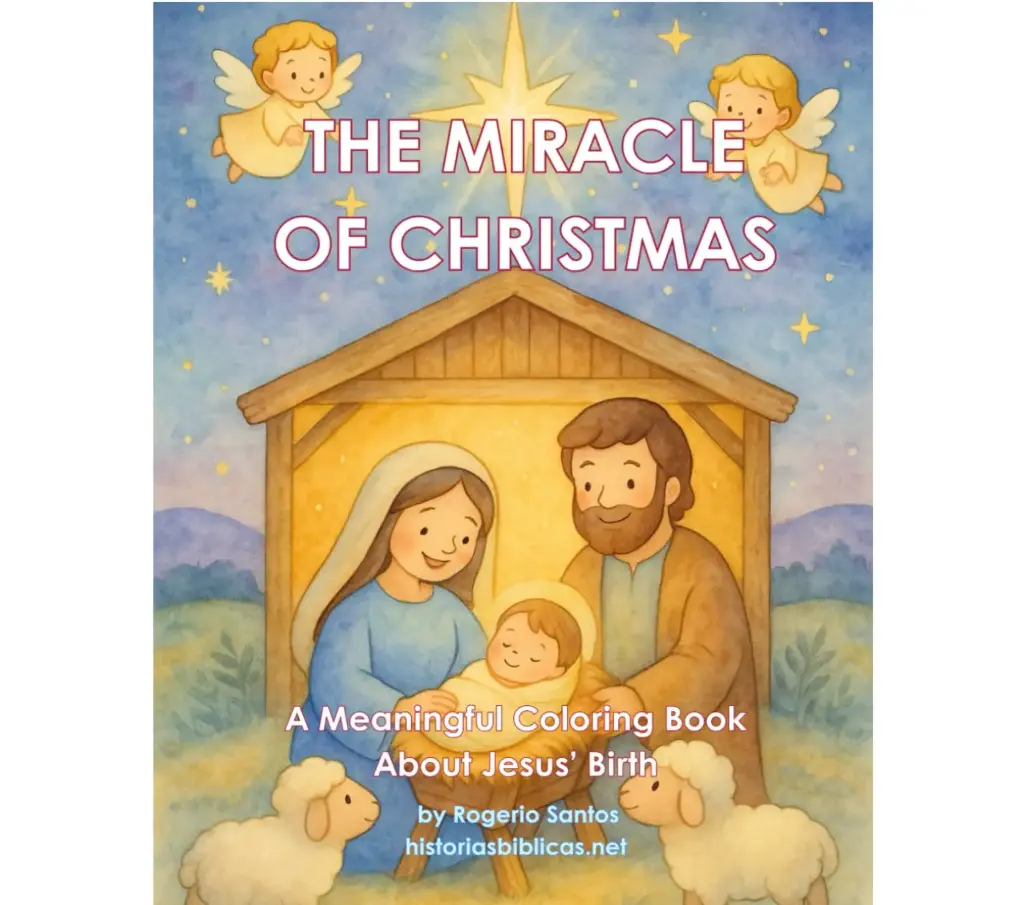
The Miracle of Christmas
A Meaningful Coloring Book About Jesus’ Birth, by Rogério Santos, combines Nativity scenes to colour, simple text and questions for reflection.
Choose a scene together after storytime and talk about how it connects with Jesus’ birth. The Angel Message Card activity above can be enjoyed independently of the book.
Share One Encouraging Message
The shepherds heard extraordinary news during an ordinary night of work. Read their story, make a card and choose someone to remember with kindness this Christmas.