What happens when someone makes a wrong choice and wants to make things right?
Will they be welcomed back?
Can a relationship begin again?
Jesus told a beautiful story about a father and his two sons to help us understand God's mercy and love.
It's known as the Parable of the Prodigal Son, and it appears in Luke 15:11–32.
This read-aloud lesson is designed for children aged 5–10. It is a shortened retelling; questions about the characters’ feelings invite children to imagine rather than add details to the Bible passage. Gather together, read the story slowly, and use the discussion cards afterwards to explore what it means to forgive, come home, and welcome someone with love.
The Prodigal Son Story for Kids
1. The Son Who Wanted to Leave
Once, there was a father who had two sons.
They lived together, and the father cared deeply about both of them.
The older son stayed close to home and worked hard.
But the younger son wanted something different.
He asked to receive his share of the family property before leaving home.
One day, he approached his father.
"Father, I want my share of the family inheritance now."
An inheritance is money or property that someone usually receives after a family member dies.
The father divided his property between his two sons.
Soon afterwards, the young man packed his belongings and left home.
Imagine how different life far from home might have felt.
2. Everything Seems Wonderful — at First
The younger son travelled to a distant country.
He spent his money on whatever he wanted.
Jesus tells us that he wasted his possessions in reckless living.
But he wasn't careful.
Little by little, his money disappeared.
Then something terrible happened.
A famine came to the country.
Food became scarce, and life grew difficult.
The young man had nothing left.
He found work feeding pigs, but he was so hungry that even the pigs' food looked good to him.
He was far from home, and no one gave him anything to eat.
3. Remembering Home
One day, the young man stopped and thought about his father.
He thought about how much food his father’s hired workers had.
Even his father's workers had enough to eat.
And here he was, hungry and miserable.
He realised that he had made wrong choices.
He decided to return home.
He planned to tell his father that he had sinned against God and against him, and was no longer worthy to be called his son. He would ask to be treated as a hired worker.
Then he got up and went home.
Pause and wonder together: How might he have felt as he set off?
4. The Father Who Ran to Meet Him
Back at home, something wonderful was about to happen.
While the younger son was still far away, his father saw him approaching.
Imagine that moment.
The father recognised his son in the distance.
And what did he do?
He ran!
He hurried down the road, opened his arms, and embraced his son.
The young man admitted that he had sinned against God and against his father, and said he was no longer worthy to be called his son.
But his father welcomed him with compassion.
He told the servants to bring the best robe, a ring, and sandals.
Then he prepared a celebration.
His son had returned!
The father was filled with joy.
Pause here and ask your child: How do you think the son felt when his father ran to hug him?
5. The Older Brother Feels Left Out
But the story wasn't finished.
The older son was working in the fields.
When he came home, he heard music and celebration.
"What is happening?" he asked.
Someone explained that his younger brother had returned and that their father was celebrating.
The older son became upset.
He had stayed home.
He had worked hard.
He had tried to do what was right.
Why was there a celebration for the brother who had left and made so many wrong choices?
The older son refused to go inside.
He felt hurt and overlooked.
6. The Father Goes Out Again
When the father realised that his older son was outside, he went to speak with him.
He came outside and urged him to join the celebration. The older son told his father why he was angry.
The father reminded the older son that he had always been part of the family and that everything the father had was his.
But his younger brother had been lost and was now found.
That was something worth celebrating.
The father's love had room for both sons.
One son had returned from far away.
The other was standing just outside the door, struggling with sadness and resentment.
And the father reached out to both.
7. The Door Remains Open
Here is something especially interesting about Jesus' story.
The Bible doesn't tell us whether the older brother finally joined the celebration.
We are left wondering what he chose.
Did he walk through the door?
Did he welcome his brother?
Did he allow himself to share in the family's joy?
Jesus leaves that question open.
And perhaps it invites us to think about our own choices.
Will we hold on to resentment?
Or will we learn to welcome, forgive, and love?
The father's invitation reminds us that God's mercy is generous, and His love calls us toward reconciliation.
What Does the Prodigal Son Teach Children?
Jesus told this parable while some people were complaining that He welcomed sinners and ate with them (Luke 15:1–2). The father’s joy helps us understand that welcome, while the older brother’s response invites us to examine our own.
The story gives families an opportunity to explore four important lessons.
God's Love Is Not Something We Have to Earn
The younger son returned home expecting to be treated like a worker.
Instead, the father welcomed him as his son.
The celebration wasn't a prize for his bad choices.
It was an expression of joy that someone who had been lost had returned.
Explain to your child: "God loves us even when we make wrong choices. We can turn back to Him, ask for forgiveness, and begin again."
Saying Sorry Takes Courage
The younger son did more than feel regret.
He recognised that he had done wrong and decided to return.
Children can learn that making things right often begins with honesty.
For example, if a child deliberately breaks a rule or speaks unkindly, they can acknowledge what happened, apologise, and try to repair the harm.
An accident is different from deliberately choosing to do something wrong.
Explain to your child: "When we make a hurtful choice, we can tell the truth, say sorry, and try to make things better."
Forgiveness and Reconciliation Take Love
The father's welcome shows extraordinary mercy.
But this doesn't mean hurtful actions have no consequences or that forgiveness requires us to ignore our safety.
Children can learn that healthy reconciliation includes kindness, responsibility, and sometimes time. Forgiveness does not require accepting repeated harm or immediately trusting someone again. If a person makes a child feel unsafe, they should tell a trusted adult; this story is not an instruction to return to an unsafe place.
Explain to your child: "We can choose not to seek revenge, while still asking for help, setting boundaries, and making things right."
Love Has Room for More Than One Person
The older brother felt overlooked when his father celebrated the younger son's return.
Many children understand this feeling.
Perhaps a sibling receives special attention, or a friend gets something they hoped to receive.
The father's response reminds us that loving one person does not mean loving another less.
Explain to your child: "Someone else's happy moment doesn't take away your worth. You matter too."
Story Discussion Cards: Let's Talk About Coming Home
These cards turn the Prodigal Son story into a gentle family conversation.
Recommended ages: 5–10
Time needed: 10–15 minutes
Materials: Paper and child-safe scissors, with adult help, if you'd like to make physical cards
Read the prompts directly from your screen or copy them onto paper; there is no separate download. Choose one or two cards at a time. Children can pass on a question or talk about an imaginary situation rather than share something private.
Card 1 — A Brave Decision
Story moment: The younger son decides to return home.
Ask: "Why do you think going home felt scary?"
Think together: Sometimes admitting we've done something wrong takes courage.
Family connection: Talk about a time when telling the truth helped make a situation better.
Card 2 — The Father's Hug
Story moment: The father runs to welcome his son.
Ask: "What do you think the father wanted his son to know?"
Think together: The father's embrace expresses love and compassion.
Family connection: Ask what helps each person feel loved and welcomed. It might be kind words, someone listening carefully, or a hug if they want one. No one needs to hug to show forgiveness or belonging.
Card 3 — Starting Again
Story moment: The younger son admits his wrongdoing.
Ask: "What can we do when we've made a hurtful choice?"
Think together: We can take responsibility, apologise, and try to repair the harm.
Family connection: Practise a simple sentence: "I'm sorry I chose to do that. How can I help make things better?"
Card 4 — The Older Brother's Feelings
Story moment: The older brother refuses to join the celebration.
Ask: "Why do you think he felt upset?"
Think together: Sometimes people feel jealous, disappointed, or overlooked. Those feelings can be discussed without hurting others.
Family connection: Talk about how someone can express frustration respectfully.
Card 5 — Love for Both Sons
Story moment: The father goes outside to speak with his older son.
Ask: "What does this tell us about the father's love?"
Think together: He cares about both sons and invites both into the family celebration.
Family connection: Name one way your family can help everyone feel included.
Card 6 — The Open Door
Story moment: The story doesn't reveal whether the older son enters the celebration.
Ask: "What would you do if you were the older brother?"
Think together: Forgiveness, kindness, and reconciliation can involve choices that aren't always easy.
Family connection: Invite your child to imagine a kind ending for both brothers.
A Simple Family Activity: The Welcome Home Door
After discussing the cards, try this quick creative activity.
What You'll Need
- A piece of paper
- Crayons or coloured pencils
- Optional: child-safe scissors and glue, with adult help
Step 1: Draw an Open Door
Ask your child to draw a house with a large open door.
Explain that this is a picture of welcome and God’s mercy, not an instruction to open the front door to strangers.
Step 2: Add Words of Welcome
Around the doorway, write words or phrases such as:
- You are loved.
- Let's talk.
- I am listening.
- We can try again.
- You belong.
Step 3: Choose One Action
Ask:
"What can our family do this week to help someone feel welcomed or included?"
Your child might choose to invite someone into a game, listen to a sibling, apologise for an unkind choice, or make a thoughtful card.
Write that action inside the doorway.
Step 4: Display the Drawing
Place the finished picture somewhere your family will see it.
Let it remind everyone that love can be expressed through listening, welcoming, forgiveness, and thoughtful choices.
A Short Prayer About Forgiveness and Love
Dear God,
Thank You for loving us.
Help us be honest when we make wrong choices.
Give us courage to apologise and make things right.
Teach us to forgive with wisdom and kindness.
When we feel jealous or left out, remind us that we matter too.
Help our family become a place of love, patience, and welcome.
Amen.
Frequently Asked Questions About the Prodigal Son for Kids
What is the main lesson of the Prodigal Son?
The parable teaches about God's mercy, repentance, forgiveness, and the joy of reconciliation. It also challenges us to consider whether we are willing to welcome others with compassion.
Where is the Prodigal Son story in the Bible?
The Parable of the Prodigal Son is found in Luke 15:11–32.
What does "prodigal" mean?
"Prodigal" commonly means spending money or resources in a wasteful or extravagant way. The younger son receives this name because he wastes his inheritance while living away from home.
Why did the father forgive his son?
In Jesus' parable, the father's actions demonstrate great compassion and joy at his son's return. Christians understand the father as an image of God's mercy toward those who turn back to Him.
Why was the older brother angry?
The older brother felt that his faithfulness had not been recognised and that his younger brother was receiving an undeserved celebration. His reaction invites us to reflect on jealousy, fairness, and mercy.
Did the older brother join the celebration?
The Bible doesn't tell us. Jesus leaves the older brother's decision unresolved, inviting listeners to reflect on their own response to mercy and forgiveness.
What is a simple Prodigal Son activity for Sunday school?
Use the six story discussion cards or invite children to draw an open door with words of welcome. Both activities encourage reflection on forgiveness, belonging, and God's love.
Continue the Story With The Secret of the Father’s Love
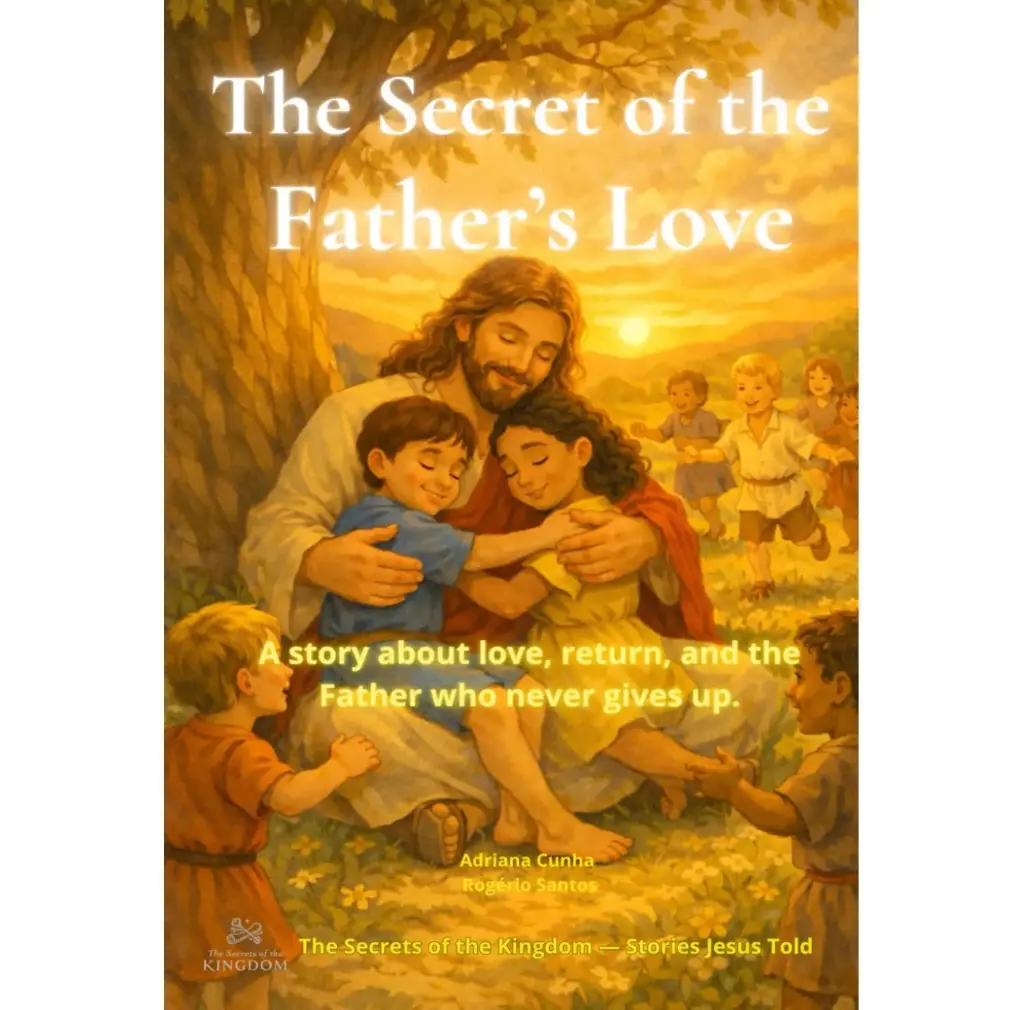
The Secret of the Father’s Love
Explore the Prodigal Son through simple language and illustrations, with a story that opens family conversations about God’s love, forgiveness and the joy of coming home.
Read together, then choose a discussion card from this article and talk about one way to help someone feel included.
Explore the BookOne Invitation for Tonight
Read the story together, choose one discussion card, and allow your child to share their thoughts.
You don't need to answer every question in one sitting.
Tonight, ask: "What can we do to help someone feel loved and welcomed home?"